News

Best Face Serum for Uneven Skin Tone (2026): Top Picks
Uneven tone on a man's face is rarely one problem wearing a single name. It's leftover sun damage on the cheekbones, razor marks that never fully faded along the jaw, and patches of oil that make some areas look darker by 2pm than others. The fix depends on which one is actually happening on your face, and the ranking below sorts by named active ingredient and price, not marketing language. TL;DR Even-Tone Glow Serum is the best face serum for uneven skin tone in 2026 for daily vitamin C use — Buy. Even-Tone Routine Duo pairs a morning brightening step with an evening exfoliant for stubborn dark spots — Buy. Overnight AHA Exfoliating Serum smooths texture with lactic acid but doesn't target pigment directly — Consider. Skip any serum that says 'brightening complex' without naming the acid or vitamin C form behind it. Quick numbers €26.40 Even-Tone Glow Serum price 2026 Olirs pricing €52.50 Even-Tone Routine Duo price 5 serums compared for 2026 Why this matters Most men blame genetics for uneven skin tone. Genetics plays a role, but the three biggest drivers are things you actually control: unprotected sun exposure, post-shave inflammation that leaves a mark after the bump heals, and sebum that oxidises when it hits air and darkens over time. None of that is fixed by a stronger claim on a box — it's fixed by the right active ingredient, used consistently. A closer look at vitamin C for dark spots on men's skin breaks down why the same razor bump fades in two weeks on one guy and leaves a mark for two months on another. Short version: it's about how long the inflammation sits on the skin, not how "bad" your skin is. A serum can help skin look more even. It cannot correct a medical pigmentation condition, and no formula on this list claims to. That's not a hedge — it's the appearance-language line every ingredient list has to respect. How we ranked Each entry below is ranked on four things: the named active ingredient (not a vague "brightening complex"), the disclosed form and concentration where Olirs publishes it, whether the certification claims on the product actually hold — COSMOS Natural, where it applies, not a self-declared "clean" label — and price per bottle against what the formula is actually doing. A €52.50 two-step routine has to earn its price against a €26.40 single serum. If the second step isn't doing distinct work, it's not worth the extra step in a morning routine. That's the bar every pick below had to clear. The ranked list — best face serum for uneven skin tone in 2026 1. Even-Tone Glow Serum — the label-first pick Stabilised vitamin C, ferulic acid, and hyaluronic acid, priced at €26.40. Vitamin C is the ingredient dermatology literature points to most often for a brighter-looking, more even-looking complexion, and ferulic acid is added specifically to help the vitamin C stay stable once the bottle is opened — that's the part most "vitamin C serums" skip. This is the serum to reach for if you want one product, used daily, with a named active you can check against the INCI list yourself. Verdict: Buy. Even-Tone Glow Serum 2. Even-Tone Routine Duo — the two-step system A morning antioxidant step paired with an evening exfoliating step, €52.50 for the pair. This is built for men whose dark spots don't move with a single serum alone — the morning step works on future spots, the evening step works on lifting the surface cells sitting over existing ones. It costs more than running one serum, and it should: two distinct jobs, two distinct actives. Verdict: Buy, if you've already tried a single serum for six to eight weeks and seen a plateau. Even-Tone Routine Duo 3. Overnight AHA Exfoliating Serum — the texture play Lactic acid lifts away dead surface cells overnight; hyaluronic acid is added to keep skin from feeling stripped the next morning. Priced at €32.40. This is not a pigment serum — it's a texture serum, and texture and tone get confused constantly. Rough texture scatters light unevenly and can make tone look worse than it is. Fix the texture and the tone often looks better without touching a single pigment ingredient. Verdict: Consider, as a second step layered under a vitamin C serum, not instead of one. Overnight AHA Exfoliating Serum 4. Peptide Firm-Look Serum — the wildcard Peptides for the appearance of firmness and fine lines, plus two molecular weights of hyaluronic acid, at €42.40. This one is aimed at texture and firmness, not tone — it made the list because men shopping for "uneven skin tone" often actually mean "my skin looks rough and uneven under light," which is a firmness-and-texture problem, not a pigment one. If pigment is the actual complaint, this isn't the fix. Verdict: Skip, unless firmness is the real issue you're solving for. Peptide Firm-Look Serum 5. Advanced Night Renewal Serum — the evening pairing Bakuchiol oil serum with rosehip and evening primrose oils, €35.40, built for smoother-looking, more comfortable skin overnight. Bakuchiol is the plant-derived active people reach for when a stronger exfoliant makes their face peel — it works slower, and that's the trade. Good as a gentler evening layer for men who found the AHA serum too strong. Not built to move pigment on its own. Verdict: Wait, and add it later once your evening routine already includes a named brightening or exfoliating step. Advanced Night Renewal Serum If the label doesn't name the acid, the serum isn't correcting tone, it's guessing. Comparison table Serum Named active Price Best for Verdict Even-Tone Glow Serum Vitamin C + ferulic acid €26.40 Daily brightening Buy Even-Tone Routine Duo AM antioxidant + PM exfoliant €52.50 Stubborn dark spots Buy Overnight AHA Exfoliating Serum Lactic acid €32.40 Rough texture Consider Peptide Firm-Look Serum Peptides €42.40 Firmness, not tone Skip Advanced Night Renewal Serum Bakuchiol €35.40 Gentle evening layer Wait Where to buy Buy directly from Olirs so the ingredient list on the page matches the bottle you receive — third-party resellers don't always carry the current formula version. Check the label for the named acid or vitamin C form before adding anything to cart. "Brightening complex" with no ingredient behind it is the tell of a filler formula, and Olirs' own product pages name the actives specifically so you can verify this yourself. Don't stack two exfoliating steps — an AHA serum and a strong bakuchiol serum — in the same evening routine. That's how skin gets reactive and looks worse, not more even. Featured picks for uneven tone Even-Tone Glow Serum Vitamin C, ferulic acid, and hyaluronic acid serum for brighter-looking, even-looking, hydrated skin. €35.40 Even-Tone Routine Duo Two-step serum duo for brighter-looking, even-looking, hydrated skin. €52.50 Overnight AHA Exfoliating Serum Lactic acid lifts dead surface cells overnight for smoother-looking texture. €32.40 FAQ What's the best face serum for uneven skin tone in 2026? Even-Tone Glow Serum is the strongest daily pick for 2026, built on stabilised vitamin C and ferulic acid at €26.40. For stubborn spots that don't move with one serum, the Even-Tone Routine Duo adds an evening exfoliating step for €52.50. Is vitamin C or an AHA better for uneven skin tone? Vitamin C works on the pigment side, an AHA works on surface texture. Rough texture scatters light and can make tone look worse than it is, so many men need both, not either. Can a face serum actually fix uneven skin tone? A serum can help skin look more even and hydrated over consistent use. It doesn't cure a diagnosed pigmentation condition, and any product claiming otherwise is overstating what a topical serum does. How long before a brightening serum shows a difference? Most men using a vitamin C serum daily notice a change in how the skin looks over six to eight weeks, not overnight. Skin cell turnover takes weeks, not days, which is why daily consistency matters more than the product itself. Should a vitamin C serum go on in the morning or at night? Morning, under moisturiser and sunscreen. Vitamin C's antioxidant function is most useful during the day when skin is exposed to environmental stress, not overnight. What should I check on the label for uneven skin tone? Look for the named active — vitamin C, ferulic acid, lactic acid, or bakuchiol — with a real concentration or clear positioning on the ingredient list. If the front of the box just says 'brightening complex' with nothing named, skip it. Is a two-step routine better than one serum for dark spots? Only if a single serum has already plateaued after six to eight weeks. A two-step routine like the Even-Tone Routine Duo costs more because it's doing two distinct jobs, not because more steps automatically work better. Does a COSMOS Natural certification mean a serum works better? No — COSMOS Natural means a third party audited the ingredients and how they were extracted. It's a transparency signal, not a performance claim, and it doesn't replace checking the actual active ingredient. One last thing Vitamin C and lactic acid both make skin more reactive to UV while you're using them. Run either one without daily sunscreen and you can end up trading one uneven-tone problem for another — new sun damage sitting right where the old dark spots used to be. That single habit, not the serum brand, is usually what decides whether 2026 is the year your skin tone actually evens out or just looks different. Related guides Face serum for dry skin in your 30s
Learn more
Antioxidant Gel for Screen Time Skin: 2026 Buying Guide
Eight hours of screen glare doesn't just tire your eyes — it changes how your face looks by 4pm. Skin under fluorescent office light and laptop glow reads duller and greasier faster than skin that spent the day outside, and an antioxidant gel is the step most men skip until someone on a video call asks if they're tired. TL;DR Olirs' Ginkgo Defense Gel Booster is the antioxidant gel for screen time skin worth checking first — four named plant extracts, oil-free, €25.50. Double Hydration Boost Gel layers under it for skin that feels tight by lunch — multi-molecular hyaluronic acid, non-sticky. Buy. 3-in-1 Eye Cream for Men targets the tired-eye look screens cause specifically, not the whole face. Consider. Skip anything labeled just 'antioxidant complex' — you can't check the INCI on a vague phrase. COSMOS Natural certification means an outside auditor checked the formula in 2026, not a marketing team. Why this matters A desk job does specific, checkable things to skin: recycled office air pulls moisture out faster than outdoor air, screen glare pushes men to squint and rub their eyes more, and sitting under the same light for 8+ hours flattens out any natural glow by mid-afternoon. None of that is a diagnosis. It's just what a chair and a monitor do to a face over a workday. An antioxidant gel like Ginkgo Defense Gel Booster doesn't reverse anything — no gel does, whatever the label says. What it can do is give skin a lightweight layer of named plant extracts that support how skin looks and feels through a long day at a screen, without adding the shine an oil would add under office lighting. That distinction matters more than most of the marketing around it lets on. Who this antioxidant gel is actually for This guide is for the man at a desk 6+ hours a day, most days, who's noticed his skin look duller by the afternoon or gets called "tired" more than he'd like on calls. It's not for someone chasing a dramatic before-and-after — appearance language only, because that's all any gel can honestly promise. If your main issue is active breakouts or a diagnosed skin condition, that's a dermatologist conversation, not a gel purchase. What to look for in an antioxidant gel for screen time skin Named antioxidants, not a complex If the label says "antioxidant complex" with no ingredients listed, you can't check it. Look for ingredients you can actually name and look up — ginkgo biloba, green tea extract, grape seed extract, vitamin C. That's the whole point of reading a label instead of a claim. Gel texture, not oil, for desk hours Oils sit on top of skin and reflect light — on a webcam or under office fluorescents, that reads as shine, not glow. A gel absorbs faster and stays matte longer, which matters more at a desk than in a bathroom mirror. A certification you can actually verify COSMOS Natural means a third party audited every ingredient and how it was sourced. That's different from a brand simply calling itself "clean" — a word that means nothing on its own and should only ever describe a formula, never a person. Check the certification, don't take the word for it. It has to survive a real morning If a routine needs 10 minutes and 5 steps, it gets skipped by week two. A gel that layers in one motion under moisturiser, before you leave for work, is the one that actually gets used through 2026 and past it. It admits what it won't do No antioxidant gel treats, cures, or fixes anything — that's not how appearance products work, and any brand claiming otherwise is selling you a story, not a formula. The honest version says it helps skin look less dull, not that it reverses screen damage. Top picks for screen time skin Ginkgo Defense Gel Booster — the label-reader's pick. Four named antioxidant plant extracts in one oil-free gel: ginkgo biloba, green tea, oak bark, and grape seed extract, priced at €25.50. It's built to sit under a moisturiser without adding weight or shine, which is the exact problem screen-heavy days create. Buy if you want antioxidant support you can actually check ingredient by ingredient. Double Hydration Boost Gel — the hydration layer. Multi-molecular hyaluronic acid plus sodium PCA in a lightweight, non-sticky gel at €39.40. Screens and office air conditioning both pull moisture out of skin faster than most men notice, and this is the layer that answers that specifically. Buy if your skin feels tight by early afternoon, not just dull. Vitamin C Serum — the brightening pick. Vitamin C works as an antioxidant through a different mechanism than ginkgo or green tea, and it's the one most associated with an even, less-dull look over time. Consider it if uneven tone bothers you more than midday shine — pairing it with a gel booster is layering, not choosing one over the other. Oil-Free Zinc Face Gel for Men — the shine control pick. A simple, oil-free moisturiser built for men's skin, priced at €26. If your main complaint by 3pm is a shiny T-zone under office lighting, this solves a different problem than an antioxidant gel does. Consider for oily-leaning skin specifically. 3-in-1 Eye Cream for Men — the eye-strain pick. Screens strain the eyes before they strain anything else, and the skin around them often shows it first — puffiness, a tired look, fine lines from squinting at a monitor. Consider it if the eye area is your actual complaint, not the whole face. Antioxidant gel picks for screen time skin Ginkgo Defense Gel Booster Four-plant antioxidant gel booster, lightweight and oil-free. €25.50 Double Hydration Boost Gel Multi-molecular hyaluronic acid plus sodium PCA, non-sticky gel. €39.40 Oil-Free Zinc Face Gel for Men Simple oil-free moisturiser built for men's skin. €26 What to avoid "Proprietary antioxidant complex" with no ingredients named. If you can't read it on the INCI, you can't verify it — and verification is the entire point of buying this way in 2026. Heavy facial oils as a first screen-time step. They read as shine under office lighting and on webcams, which is the opposite of what most desk workers actually want by mid-morning. Any product claiming to "reverse" or "repair" blue light damage. That's treat-and-fix language a gel can't back up. Look for appearance claims — "helps skin look less dull" — not cure claims. Verdict comparison Product Texture Key actives (named) Best for Verdict Ginkgo Defense Gel Booster Oil-free gel Ginkgo biloba, green tea, oak bark, grape seed Antioxidant support, all-day wear Buy Double Hydration Boost Gel Lightweight gel Multi-molecular hyaluronic acid, sodium PCA Tight-feeling skin by afternoon Buy Vitamin C Serum Serum Vitamin C Dullness, uneven tone Consider Oil-Free Zinc Face Gel for Men Gel moisturiser Zinc, oil-free base Midday shine Consider 3-in-1 Eye Cream for Men Cream Not published Under-eye tiredness Consider FAQ What does an antioxidant gel actually do for screen time skin? An antioxidant gel adds named plant extracts to skin's surface layer to support how it looks through a long day, not to reverse or repair anything. Ginkgo Defense Gel Booster does this with four named extracts in an oil-free base that won't add shine under office lighting. Is antioxidant gel better than a vitamin C serum for desk workers? Neither is strictly better — they work through different mechanisms and layer well together. A gel like Ginkgo Defense Gel Booster targets a lightweight, all-day antioxidant layer, while Vitamin C Serum leans toward brightening uneven tone. How much does an antioxidant gel cost in 2026? Olirs' Ginkgo Defense Gel Booster runs €25.50 in 2026, positioning it as a lower-cost layering step rather than a standalone routine. Price alone shouldn't decide it — check what's actually named on the label first. Can an antioxidant gel replace SPF? No. An antioxidant gel is not sunscreen and doesn't block UV rays the way SPF does. It's a layering step for appearance support, not a replacement for daily sun protection. Should you use antioxidant gel morning or night? Morning is the more common choice since it's meant to support skin through a day at a screen, applied before moisturiser. There's nothing stopping night use either — the ingredients don't require daylight to work. Does blue light really affect skin the way UV does? Screen light and UV light are not the same thing and shouldn't be treated as equivalent risks. The bigger day-to-day factors for desk workers are dehydration from indoor air and hours under the same artificial light, which is what an antioxidant gel is actually built to address. What ingredients should you check on the label before buying? Look for named antioxidants — ginkgo biloba, green tea extract, grape seed extract, vitamin C — rather than a vague 'antioxidant complex.' If you can't find specific ingredient names on the INCI, you can't verify what you're paying for. Is COSMOS Natural the same as organic? No, COSMOS Natural and COSMOS Organic are separate certifications with different standards. Olirs holds COSMOS Natural, which means a third party audited the ingredients and extraction methods, not the organic-specific criteria. One last thing Most men shopping for screen-time skincare assume the fix has to be a serum. It doesn't — texture matters as much as ingredients here. A gel reflects less light under a desk lamp or a laptop camera than an oil does at the same time of day, which is the entire reason Ginkgo Defense Gel Booster is built oil-free instead of oil-based. Read the ingredient list before the marketing copy, check the certification instead of trusting the claim, and build from there. Related guides Face oil for dull, tired-looking skin Night serum for men who work late shifts
Learn more
Best Skincare Gift Set for Men 2026: Ranked Picks
A skincare gift set solves one specific problem: buying for a man who has never bought his own moisturizer means he can't tell you what he wants, and a single unlabeled serum just becomes a mystery bottle in his bathroom cabinet. This guide ranks the actual gift-ready sets in the Olirs men's skincare gift set catalog for 2026, by format, certification, and how much guesswork they remove for him. TL;DR The Age-Defying Trio Collection Box is the safest men's skincare gift set for a first-timer over 30 — buy it. Skip loose single products for a first gift; a boxed routine removes the step-order guessing he'd otherwise avoid entirely. The Ultimate Renewal Collection Box covers cleanse, treat, and moisturize in one kit for the man who wants zero decisions. Every Olirs set carries COSMOS Natural, vegan, cruelty-free, gluten-free, nut-free and paraben-free certification — check for it before buying a competitor's box. Key numbers 6 Third-party certifications held COSMOS Natural, vegan, cruelty-free and more 30 days Return window on unopened sets live 2026 policy 41 countries Where sets currently ship Why this matters Most men buying for themselves never do. That's the actual reason a skincare set for first-time buyers outperforms a single hero product as a gift: it hands him an order (cleanse, then treat, then moisturize) instead of a bottle and a guess. A serum with no instructions gets used twice and forgotten. A three-step box gets used because the box tells him what step two is. The other reason to buy a set over singles in 2026: certification. Olirs formulas carry COSMOS Natural, Vegan, Cruelty-Free, Gluten-Free, Nut-Free, and Paraben-Free status — six third-party checks, not a self-declared "clean" label on the bottle. That matters more for a gift than a purchase for yourself, because you can't smell-test or patch-test on his behalf. Certification is the only verification you get before he opens the box. Who this gift is for This list is built for the buyer, not the wearer — the wife, girlfriend, sister, or mother choosing for a man who owns zero skincare beyond bar soap. If he already runs a five-step routine with actives he rotates, skip to a single serum instead; he doesn't need a starter kit. If he's never touched a moisturizer on purpose, a set is the only format that works. How the picks below are ranked Every set here is scored on three things: whether the full ingredient list is published and readable (INCI, not a marketing paragraph), whether it carries the six Olirs certifications, and whether the step count is low enough that a beginner won't quit halfway through. Sets built around actives that need a dermatologist explainer — high-percentage acids, prescription-strength retinoids — are excluded on purpose. A gift set that requires a follow-up phone call isn't a gift, it's homework. The ranked sets 1. The Age-Defying Trio Collection Box — the safe pick Three steps, one concern: fine lines and skin that's started looking less firm. As of 2026 it's built for the 35-to-50 range who notice texture change before they notice anything dramatic. Ingredient lists are published on the product page, so you can check exactly what's in it before you buy for someone else. Verdict: Buy — it's the lowest-risk pick on this list for a man who's never used more than soap. 2. The Ultimate Renewal Collection Box — the everything-decided pick This is the widest-coverage box in the current 2026 lineup — cleanse, treat, and moisturize bundled so he never has to figure out what order to use anything in. It's the right pick when you genuinely don't know his skin type and don't want to guess wrong. Verdict: Buy for the man whose entire skincare history is a bar of soap. 3. Daily Radiance Collection Box — the low-commitment gift A lighter routine, aimed at maintenance rather than correction — good for the guy who already looks fine and just wants something better than nothing. It's the pick that won't overwhelm someone opening a skincare gift for the first time. Verdict: Consider if he's under 30 and skeptical of the whole category. 4. Deep Moisture Collection Box — the dry-skin pick Built around hydration rather than active ingredients, which makes it the right call for a man in a cold climate or one who already knows his skin gets tight after showering. Hyaluronic acid draws water into the surface layer of skin, which is why hydration-first sets lean on it. Verdict: Buy specifically for dry or flaky skin; Skip it for oily skin, it won't do much there. 5. Rejuvenating Glow Collection Box — the appearance pick Aimed at dullness and uneven tone rather than fine lines — a different concern than the Age-Defying Trio, and worth knowing the difference before you buy the wrong one. Marketed on appearance only: skin can look brighter and more even, nothing here changes pigment permanently. Verdict: Consider for a man who mentions looking "tired" more than he mentions aging. 6. Glowy Skin Trio Collection Box — the minimalist trio Three steps, kept simple, for a man who'll actively resist anything that looks like a five-product regimen. If he's the type to abandon a routine by day four, this is the box least likely to end up unused in a drawer. Verdict: Consider for the reluctant beginner specifically. 7. Dark Spot Routine Duo — the targeted pick Just two steps, aimed at one specific concern: uneven patches from sun exposure or old breakouts rather than a full routine overhaul. It's the right call only if he's already mentioned dark spots or hyperpigmentation directly — otherwise it solves a problem he doesn't think he has. Verdict: Buy if the concern is confirmed; Skip it as a blind gift. A smaller add-on worth knowing about: the All-In-One Facial Oil is one of only two products in the entire Olirs catalog that can trace every oil back to a growing region and an extraction method — jojoba, rosehip, and sea-buckthorn, cold-pressed. It pairs well stacked on top of any of the boxes above as a second gift, not a replacement for one. Gift-ready picks Fresh Skin Routine Set Three-step natural routine for fresh, smoother-looking, hydrated skin. €69.70 2-in-1 Hair & Body Wash for men Multi-use hand, body and hair wash with an uplifting fragrance. €23 Oil-Free Zinc Face Gel for Men Simple, easy-to-use moisturiser for men, oil-free formula. €26 Side-by-side comparison Set Steps Best for Verdict Age-Defying Trio Collection Box 3 Fine lines, first-time buyer Buy Ultimate Renewal Collection Box 3+ Unknown skin type, wants it all decided Buy Daily Radiance Collection Box 2 Maintenance, skeptical beginner Consider Deep Moisture Collection Box 2-3 Dry or tight-feeling skin Buy (dry skin only) Rejuvenating Glow Collection Box 3 Dullness, uneven tone Consider Glowy Skin Trio Collection Box 3 Reluctant, low-commitment gifting Consider Dark Spot Routine Duo 2 Confirmed dark spot concern Buy (if confirmed) Where to buy it Buy direct from the official Olirs site rather than a marketplace reseller — the 30-day return window on unused, unopened sets is a live 2026 policy, and third-party sellers don't always honor it. Check the certification badges on the product page before you check out. COSMOS Natural means an outside body (Ecocert) audited every ingredient and how it was extracted — it's a different, stricter thing than a brand simply printing "natural" on the box. Confirm shipping coverage before you promise a delivery date. Olirs currently ships to 41 countries, and international transit windows vary enough that "it'll be there by his birthday" is a claim worth checking against the live policy first, not assuming. FAQ What's the best skincare gift set for men who don't shop for themselves? The Age-Defying Trio Collection Box and the Ultimate Renewal Collection Box are the safest picks for 2026 because both bundle a full routine in order, so he doesn't have to guess what step comes next. Is a skincare set better than buying single products as a gift? For a first-time buyer, yes — a set removes the step-order guessing that causes a single unlabeled serum to sit unused. Singles work better once he already has a routine and just needs a refill. How much does a men's skincare gift set cost? Pricing varies by set and step count; check the current price on the individual product page before buying, since bundle sizes differ across the Olirs catalog. What if he has sensitive skin? Pick a set built around hydration rather than active ingredients like acids or retinol alternatives, and check the published ingredient list before buying — fragrance-heavy formulas are the most common irritant in gift sets generally. Do skincare gift sets expire? Most skincare products carry a period-after-opening marking on the packaging, typically 6 to 12 months once opened. An unopened, unused set has a longer shelf life and can be returned within 30 days if it's the wrong fit. Should I buy a routine box or a single hero product? A routine box is the better first gift because it decides the order for him. A single product works as a second or third gift, once he's already using something daily. Does COSMOS Natural certification matter for a gift? It matters more for a gift than a self-purchase, because you can't patch-test on his behalf. COSMOS Natural means a third party audited every ingredient and its extraction method before the product could carry the label. Is a cologne a good add-on to a skincare gift set? It works as a second item alongside a routine box, but shouldn't replace one — a fragrance doesn't solve the guesswork problem a skincare set solves, it just adds a scent on top of whatever routine he already has or doesn't have. One last thing Only two products in the entire Olirs catalog can currently back a full farm-to-face origin story with a named growing region and extraction method: the All-In-One Facial Oil and the Gentle Cleansing Milk. Everything else in the men's skincare gift set lineup earns that same level of sourcing detail as it gets added — worth knowing if traceability is the thing that would actually impress the man you're buying for. Related guides A simple skincare routine for men who hate fuss
Learn more
Post Workout Skincare Routine for Men (2026 Guide)
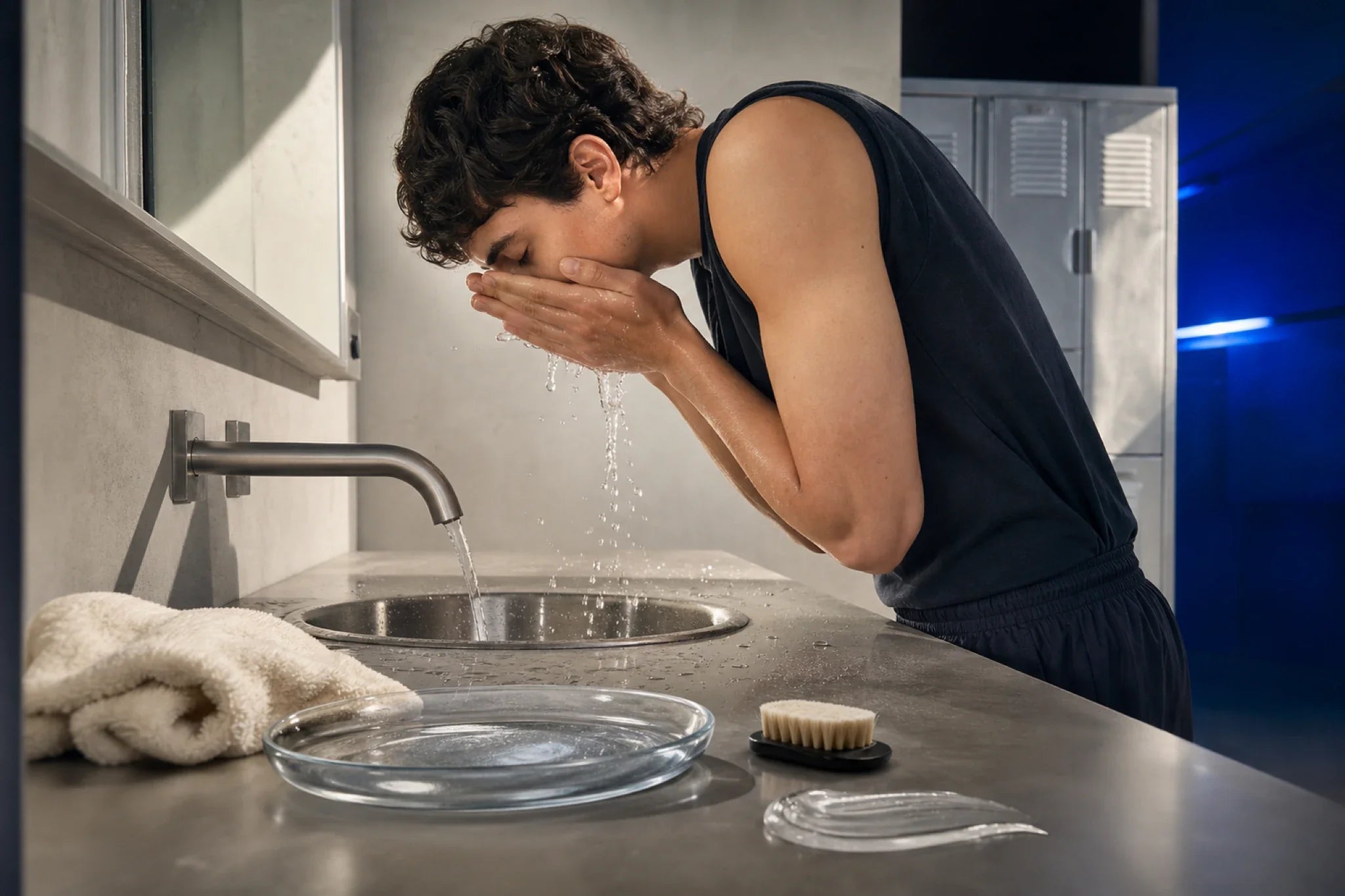
Sweat sits on skin for a reason your gym towel doesn't fix: sebum, salt and bacteria mix on the surface and start breaking down within the hour, which is what turns a good workout into a breakout two days later. A post workout skincare routine for men isn't about adding steps — it's about doing the two or three that matter in the right order, fast. TL;DR A post workout skincare routine for men starts with a rinse inside 30 minutes, not a delayed shower. Oil-Free Zinc Face Gel for Men suits sweaty, oily post-gym skin — lightweight, non-greasy. Buy it. 2-in-1 Hair and Body Wash for men handles scalp sweat and body odor in one bottle for a gym bag. Buy it. Bar soap on your face after training strips the skin barrier — skip it for a proper cleanser. Bacne and chest breakouts after lifting come from trapped sweat under fabric, not bad genetics. Why this matters Skin's surface normally sits around pH 4.7, according to a 2006 study on skin surface pH (Lambers et al.) — mildly acidic, which is what keeps bacteria in check. Sweat pushes that number up temporarily, and once skin sits closer to neutral, the bacteria that cause body odor and clogged pores get a window to work. Add gym equipment, tight fabric and a shared shower, and that window gets longer, not shorter. Olirs built a full gym mornings routine set around this exact problem, because the fix isn't complicated — it's timing. Read the guide once you've got the order down here; it goes deeper on the morning-specific version of this routine. What you'll need A gentle facial cleanser that isn't the bar soap sitting in the gym shower An oil-free moisturiser or gel — heavy creams sit badly on skin that's still sweating A body wash that also covers hair, if your gym bag has limited space A clean towel, used once and washed, not reused across sessions 10 to 15 minutes, ideally within 30 minutes of finishing your set The steps 1. Rinse before sweat dries on skin Sweat that sits for more than 30 to 60 minutes starts mixing with sebum and bacteria on the surface, which is the actual mechanism behind post-gym breakouts — not the workout itself. Rinse with lukewarm water as soon as you reasonably can, even if a full shower has to wait until you're home. Hot water strips more oil than it needs to and leaves skin tighter than before you trained. Common mistake: toweling off and getting dressed without rinsing at all because "the shower's later" — by then the damage is already happening on your skin, not in your gym bag. 2. Cleanse the face separately from the body Bar soap is formulated for the body, and using it on your face after a workout is one of the fastest ways to leave skin dry in the T-zone and oily everywhere else by evening. A facial cleanser is worth the extra 20 seconds. If your skin runs oily post-workout, a lighter foaming or gel formula clears sweat and residue without over-stripping. Common mistake: using the same bar of soap top to bottom because it's convenient — your face barrier pays for that convenience within a day or two. 3. Treat the body where sweat gets trapped Bacne and chest breakouts after lifting aren't a genetics problem — they're a trapped-moisture problem. Tight shirts, weight benches and gym mats hold sweat against skin for the length of your session, and that's exactly the setup bacteria need. A 2-in-1 hair and body wash covers scalp and torso in one step, which matters more than it sounds like when you're trying to get out the door. Common mistake: washing the chest and back last, after the water's gone cold and the wash gets rushed. 4. Moisturise with something oil-free Post-workout skin is often still slightly warmer and oilier than usual, and a heavy cream on top of that combination is how the midday shine starts. An oil-free zinc face gel gives hydration without adding to the oil that's already there. This won't fix active acne — it manages the environment that lets acne start. Common mistake: skipping moisturiser entirely because skin "already feels oily" — stripped skin overproduces oil to compensate, which makes the shine worse by afternoon. 5. Handle the scalp, not just the face A sweaty scalp left unwashed contributes to hairline breakouts that get blamed on the face when the actual cause is a headband or a helmet-style cap holding sweat against the skin. Washing scalp and hairline in the same session as your face routine closes that gap. Common mistake: treating hairline bumps with a spot treatment meant for the face — the cause is different, so the fix needs to start at the scalp. 6. Check the mirror again at midday A morning routine that looks fine in the bathroom mirror can look shiny and clogged by 1pm if the post-gym step got skipped or rushed. This is the check that tells you whether steps 1 through 5 actually worked, not just whether you did them. Common mistake: judging the routine by how skin looks right after the shower — that's not the test; six hours later is. Built for after training 2-in-1 Hair & Body Wash for men Hand, body and hair wash in one bottle, built for a gym bag. €23 Oil-Free Zinc Face Gel for Men Lightweight, oil-free moisturiser for post-workout, oil-prone skin. €26 Fresh Skin Routine Set Three-step routine for oily, sweat-prone skin: cleanser, serum and gel. €69.70 “If you can still smell sweat after the shower, the problem isn't your soap. It's the wash time.”Troubleshooting Breakouts along the jaw or hairline after every session. Usually a headband, cap strap or helmet padding trapping sweat against skin for the whole workout. Wash that contact line specifically, not just the general face routine. Body still smells hours after the shower. Sebaceous and apocrine sweat glands are concentrated in the underarms, chest and back — a quick rinse there isn't the same as an actual wash. Give those areas the full 20 to 30 seconds a face gets. Face still shiny by midday. Either the moisturiser isn't actually oil-free, or the cleanser stripped skin enough that it's overcompensating with extra oil. Swap the cleanser before swapping the moisturiser. Razor burn worse after training. Shaving right before a workout means fresh nicks sit in sweat and friction for an hour or more. Shave after the post-workout rinse instead, on calmer skin. Bacne that won't clear. This won't clear with a face routine transplanted onto the back — the skin is thicker and the trigger is trapped moisture under fabric, not diet. A zinc-based wash on the torso, applied consistently, helps more than any single product used once. Dry, tight skin despite moisturising. Over-washing twice a day with a stripping cleanser undoes what the moisturiser is trying to do. One proper cleanse post-workout beats two rushed ones. Tools and resources 2-in-1 hair and body wash — scalp and torso in one step, useful for a gym locker or overnight bag Oil-free zinc face gel — lightweight hydration for skin that's already producing extra oil A separate face cleanser, kept out of the shared gym shower entirely A weekly check-in on skin, not just a post-shower glance, to catch shine or breakouts building over days rather than hours What to do next Once the timing is locked in, the next question is what the rest of the morning looks like — shaving order, sunscreen, and whether a serum belongs in a routine this short. The gym mornings routine set walks through the full sequence for men training before work, not just the post-workout patch job. FAQ What's the best post workout skincare routine for men? Rinse within 30 minutes of finishing, cleanse face and body separately, then apply an oil-free moisturiser. Skip bar soap on the face and treat the scalp in the same session, since trapped sweat there causes hairline breakouts too. Is it bad to wait to shower after the gym? Waiting more than about an hour lets sweat, oil and bacteria mix on skin, which is the main driver of post-workout breakouts. A quick rinse sooner beats a thorough shower much later. Should men moisturise after working out? Yes, but with an oil-free formula, since skin is often still warm and slightly oily right after training. Skipping moisturiser entirely tends to make skin overproduce oil to compensate. Does sweat cause acne directly? Sweat itself doesn't cause acne, but sweat mixed with sebum and bacteria under tight clothing or trapped against skin does. That's why bacne and chest breakouts cluster around gym gear contact points. Can I use regular bar soap on my face after the gym? It's not the best choice — bar soap is formulated for the body and tends to strip facial skin, leaving it dry in some areas and oilier in others by evening. A facial cleanser handles the same job with less imbalance. How do I stop breakouts along my hairline from workouts? Wash the scalp and hairline in the same post-workout session as your face, since headbands and caps trap sweat right at that contact line. Spot treatments made for facial skin don't address the scalp-level cause. What causes bacne after lifting weights? Bacne after lifting is usually trapped sweat under a shirt or against a bench, not a diet or genetics issue. A zinc-based wash applied consistently to the torso addresses the trigger more directly than a facial routine. How long after a workout should I wash my face? Within 30 minutes is the practical target, before sweat and sebum have time to mix and settle into pores. Even a quick water rinse before a full shower later helps close that window. One last thing The part of this routine men skip most isn't the moisturiser — it's the scalp. A hairline breakout gets treated as a face problem for weeks before anyone thinks to wash sweat out from under a headband, and that single fix clears it faster than any product swap. Check the certification and ingredient list on whatever goes on your face after training — don't take a product's word for what's in it; read the INCI yourself. Related guides Natural face wash for oily skin Face serum for razor burn and irritation
Learn more
How to Stop Oily Shine on Your Face in 2026
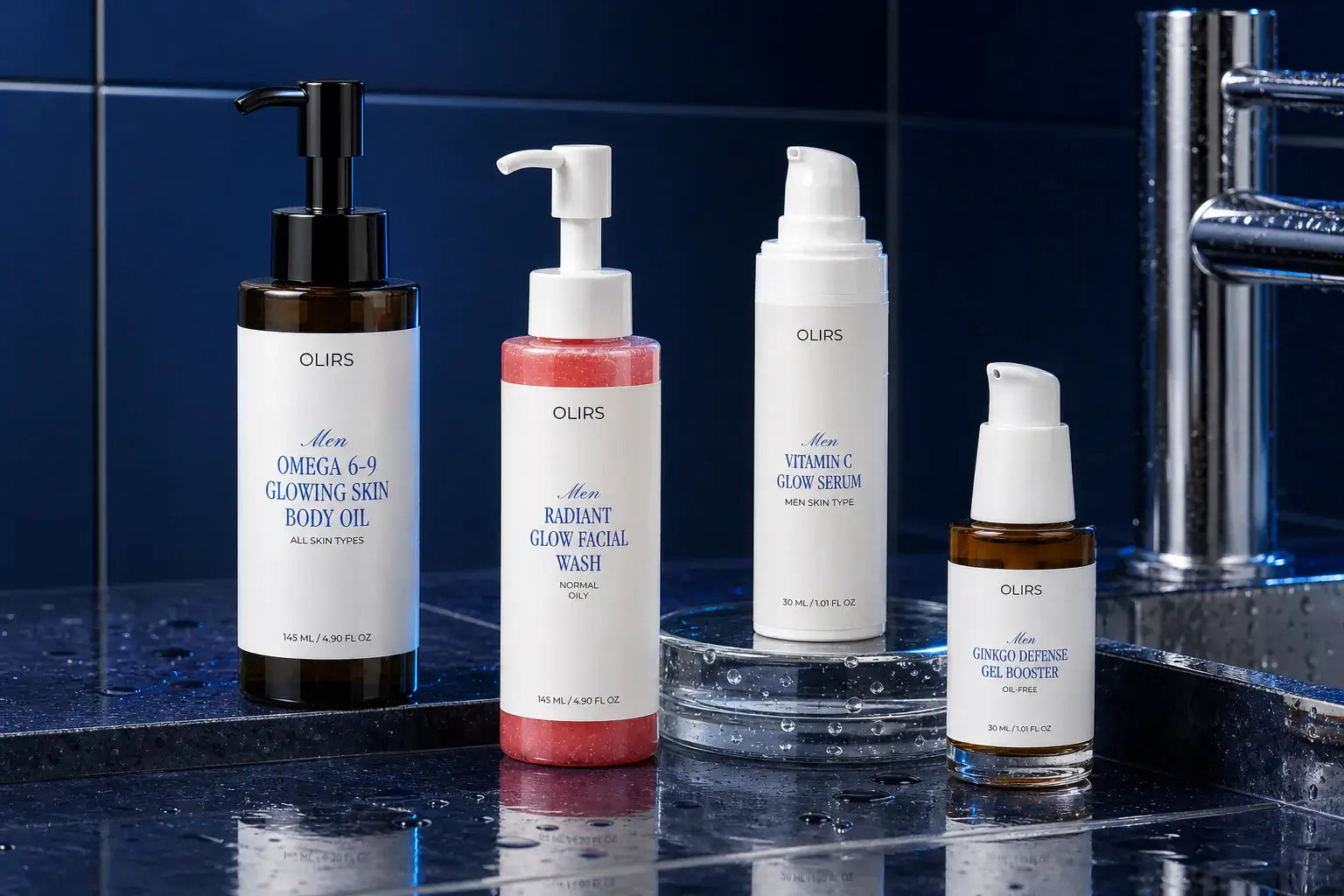
Midday shine on the T-zone usually isn't a sign your skin makes too much oil — it's a sign your routine is stripping it, then your face overcorrects. Fix the routine, not just the shine, and the fix holds past noon. TL;DR Cleansing twice a day, not four times, is the real fix for how to stop oily shine face without stripping skin. Oil-Free Zinc Face Gel for Men replaces heavy cream on shine-prone zones — skip anything with mineral oil or petrolatum. Skipping SPF because your face feels oily backfires; use an oil-free SPF 30 daily through 2026, even indoors. Rebound oil from over-washing takes 2 to 3 weeks to settle once you stop stripping the skin barrier. Why this matters Oily skin isn't a flaw to correct — it's a gland doing its job at a rate your routine hasn't adjusted for. Sebaceous glands sit densest across the forehead, nose, and chin, which is exactly why shine shows up there first and worst by early afternoon. The common mistake is treating shine as dirt. Wash harder, wash more often, use a stripping bar soap, and the skin barrier reads that as an emergency. It responds by producing more oil, faster, to compensate. You end up shinier by 2026's standards than you were before you started "fixing" it. Olirs builds its skincare around ingredient function, not marketing claims — read the INCI on anything you put on your face before you decide it's the right call for oily skin. That habit alone solves half of what goes wrong with shine control. What you'll need A gel or foam cleanser suited to oily skin, not a bar soap or a scrub An oil-free, non-comedogenic moisturiser (zinc-based works well for the T-zone) A mattifying or clarifying gel for midday touch-ups Blotting papers or a clean tissue — not a wipe An oil-free SPF 30, applied daily regardless of weather 5 to 10 minutes, morning and night The steps 1. Cut cleansing to twice a day Washing your face more than twice daily strips the lipid layer that keeps oil production in check. Once that layer thins out, glands overproduce to rebuild it, and you get shinier, not less shiny. Use a gel or foam formula, once in the morning and once before bed. Radiant Glow Facial Wash is built as a 98% natural-origin gel cleanser on an aloe base — the aloe helps skin feel comfortable through the wash instead of tight afterward. Expected outcome: skin feels clean, not squeaky. Squeaky-clean is the sign you've gone too far. Common mistake: washing a third time midday because the face looks oily. That third wash is what causes tomorrow's oil. 2. Drop the bar soap and the physical scrub Bar soap runs alkaline, well above the skin's natural pH of roughly 4.5 to 5.5. That mismatch disrupts the acid mantle, the thin protective film that regulates moisture and oil at the surface. Physical scrubs with jagged exfoliating beads do the same damage mechanically, by micro-tearing the surface. Swap both for a pH-appropriate cleanser and save any exfoliating acid for a dedicated step, not your daily wash. 3. Moisturise with something oil-free, every time Skipping moisturiser because your skin already looks oily is the single most common shine mistake. Dehydrated skin — skin lacking water, not oil — actually produces more sebum to compensate, which reads on your face as more shine, not less. Oil-Free Zinc Face Gel for Men is formulated as a lightweight, oil-free gel rather than a heavy cream, built to sit under a T-zone without adding to the shine problem. Apply it after cleansing, both morning and night, while skin is still slightly damp. Common mistake: switching to "nothing" instead of switching formulas. The fix for oily skin is a lighter moisturiser, never zero moisturiser. 4. Target the T-zone with a mattifying gel, not your whole face Shine concentrates on the forehead, nose, and chin because that's where sebaceous gland density is highest. Applying a clarifying or mattifying gel across your entire face when only the T-zone runs oily can leave your cheeks and jawline dry and flaky by the afternoon. Spot-apply a lightweight gel formula to the T-zone only, layered over your regular moisturiser. This is a targeting problem, not a product-strength problem — most guys reach for something stronger before they try applying less, in less area. 5. Blot at midday instead of washing again When shine builds up around lunchtime, blotting paper pressed gently against the T-zone lifts surface oil without disturbing the skin barrier. A wet wipe or a splash of water does the opposite — it reactivates the cleanser residue and moisturiser underneath, and the face often looks worse ten minutes later. Press, don't rub. One sheet, three to four spots, done in under 30 seconds. Common mistake: rubbing a tissue across the face, which spreads the oil instead of lifting it off. 6. Apply SPF 30 daily, oil-free formula only Sunscreen gets skipped by guys with oily skin more than any other group, usually because a heavy, occlusive SPF genuinely does make shine worse. The answer isn't skipping it — UV exposure is the single biggest driver of visible skin ageing over time, oily skin included — it's picking an oil-free, non-comedogenic formula. Apply it as the last step of your morning routine, every day, including overcast days in 2026's shoulder seasons when UV still gets through cloud cover. 7. Read the ingredient list before you buy anything new Comedogenic oils, heavy silicones, and occlusive waxes sit near the top of the ingredient list on plenty of products marketed as "for oily skin." The marketing claim and the INCI list don't always agree. Check the actual ingredient order, not the front-of-bottle claim. This is the whole point of reading the label instead of trusting the packaging — a formula that says "oil-control" with dimethicone loaded near the top is working against you, not for you. Built for shine control Oil-Free Zinc Face Gel for Men Oil-free, lightweight moisturiser for men, built to layer without adding shine. €26 Radiant Glow Face Wash 98% natural-origin gel cleanser with aloe base and blackberry extract. €31.40 Daily Foaming Face Mousse Soft foaming cleanser that lifts excess oil without over-stripping skin. €30.40 Troubleshooting Still shiny by noon after two weeks of the new routine. Give it longer — rebound oil from a stripped barrier takes 2 to 3 weeks to fully calm down. Stopping the fix early is the most common reason it "doesn't work." Skin feels tight right after cleansing. The cleanser is still too harsh for your skin, even if it's marketed for oily skin. Switch to a gentler gel formula and check the ingredient order for sulfates near the top. Breakouts showed up after adding the mattifying gel. You're layering too much product on the same zone. Cut back to moisturiser alone for a week, then reintroduce the gel every other day. Shine only shows up on the nose and forehead, nowhere else. That's normal T-zone gland density, not a routine failure. Spot-treat that zone only — don't apply mattifying products across the whole face. Foundation or SPF slides off by early afternoon. Usually too much product on top of an already-oily base. Use a thinner layer of moisturiser and let it fully absorb — roughly 2 to 3 minutes — before applying anything on top. Face looks oilier since starting SPF. The SPF formula itself is occlusive. Swap to an oil-free, gel-based sunscreen rather than dropping SPF altogether. Tools and resources A cleanser suited to oily skin, applied twice daily — not a bar soap An oil-free moisturiser layered under any mattifying step Blotting paper for midday touch-ups, kept in a bag or desk drawer The INCI list on the back of any product, checked before purchase, every time An oil-free SPF 30, non-negotiable through 2026 What to do next Once shine is under control, the next problem most guys hit is picking the wrong cleanser strength for their actual skin type — too gentle does nothing, too harsh restarts the whole cycle. The deeper breakdown on matching a face wash to oily skin, without over-drying it, covers that trade-off in more detail. FAQ What causes oily shine on the face by midday? Sebaceous glands concentrated in the T-zone produce oil continuously, and it surfaces visibly by midday once the morning's moisturiser and cleanser residue wear off. Over-cleansing earlier in the day makes this worse by prompting glands to overproduce. Is it bad to wash your face more than twice a day if it's oily? Yes — washing more than twice daily strips the skin's lipid layer and triggers rebound oil production. Twice a day, morning and night, is the range that controls oil without provoking more of it. Does moisturiser make oily skin shinier? An oil-free, non-comedogenic moisturiser doesn't add shine; skipping moisturiser altogether often does, because dehydrated skin overproduces oil to compensate. The formula matters more than whether you use one at all. What ingredients help control oil without drying skin? Zinc-based formulas and lightweight gel textures help manage surface oil while still hydrating the skin. Heavy oils, mineral oil, and thick silicones tend to work against oil control despite oil-control front-of-bottle claims. Is SPF necessary for oily, shine-prone skin? Yes, daily SPF 30 is necessary regardless of skin type — the fix for oily skin is choosing an oil-free, gel-based sunscreen, not skipping sunscreen. UV exposure remains a leading driver of visible skin ageing over time. How long does it take to stop overproducing oil? Rebound oil from a stripped skin barrier typically settles within 2 to 3 weeks of switching to a gentler, twice-daily routine. Results vary by how aggressive the prior routine was. Can stripping your skin actually cause more shine? Yes — stripping the lipid layer through over-washing or harsh cleansers signals the skin to produce more oil to rebuild its protective barrier. This is the most common reason shine gets worse after starting an aggressive anti-oil routine. What's the difference between oily skin and dehydrated skin that looks oily? Oily skin overproduces sebum consistently across the T-zone; dehydrated skin lacks water and can overproduce oil as a compensating response, which looks similar but needs hydration, not oil-stripping, to resolve. One last thing The fastest way to tell if your shine is a gland problem or a stripped-barrier problem: skip the mattifying gel for three days and use only a gentle cleanser plus an oil-free moisturiser. If shine drops within that window, the old routine was the cause, not your skin. Related guides Clarifying gel for T-zone shine control Natural face wash for oily skin
Learn more
How to Use Bakuchiol for Men Without Irritation (2026)
Bakuchiol is the plant-derived alternative men reach for when retinol turns their face into a peeling, red mess. It works slower and gentler — but "gentler" doesn't mean "foolproof," and going in wrong still causes irritation. TL;DR Start bakuchiol twice a week at night — that's the core of how to use bakuchiol for men without irritation. Buffer every application with a moisturiser to cut down on redness and tightness. Bakuchiol works slower than retinol — expect visible texture change around week 8-12, not week one. Skip AHAs or vitamin C the same night until your skin has adjusted for at least three weeks. Patch test on your jaw for three nights before it touches the rest of your face. Why this matters Most irritation complaints about bakuchiol aren't about the ingredient — they're about the rollout. Men buy a bottle, apply it every night starting day one, stack it with a vitamin C serum in the morning, and then blame the actives when their skin gets tight and flaky by week two. Bakuchiol is a plant compound that mimics some of retinol's effects on skin turnover without the same level of dryness. That's the whole pitch of it as a retinol alternative — read the OLIRS guide for first-time retinol alternative users if you want the mechanism explained in more depth. But "less irritating than retinol" is a comparison, not a guarantee. In 2026, the men who get the best results from bakuchiol are the ones who treat it like any new active: slow start, real patch test, buffer with hydration. This guide is the routine, step by step — what to do the first night, what to expect by week four, and what to do when something goes wrong. What you'll need A bakuchiol serum or oil A gentle cleanser you already use A moisturiser to buffer application (a retinol alternative moisturiser works, but a plain hydrating one is fine too) A small patch of skin — jawline or behind the ear — for the first three days A calendar or phone reminder, since the frequency schedule matters more than the product The steps 1. Patch test before it touches your whole face Apply a pea-sized amount to your jawline or behind your ear for three consecutive nights before using it anywhere else. This tells you how your skin reacts without risking a reaction across your whole face. What to look for: mild pinkness that fades by morning is normal. Anything that's still red, itchy, or swollen at hour 24 means stop and reconsider the concentration or frequency. Common mistake: skipping this step because bakuchiol is marketed as gentle. Gentle relative to retinol still means it's an active ingredient, and everyone's skin barrier is different. 2. Start at two nights a week, not daily Apply bakuchiol only on, say, Tuesday and Friday nights for the first two to three weeks. This gives your skin barrier time to adjust to the increased cell turnover without compounding irritation night after night. Daily use from day one is the single biggest reason men report redness and flaking. The ingredient isn't the problem — the ramp-up speed is. 3. Apply to clean, dry skin, before moisturiser Cleanse, pat dry completely, then apply bakuchiol before your moisturiser. Applying to damp skin increases absorption speed, which sounds good but actually raises irritation risk for a first-timer. This matters because it accomplishes what the product is meant to do: deliver the active to skin that's ready for it, in a controlled dose, rather than an accelerated one. 4. Buffer every application with a moisturiser Follow bakuchiol with a moisturiser every single time, no exceptions in the first month. A hyaluronic acid face cream or an oil-free zinc face gel works here depending on whether your skin runs dry or oily. The moisturiser isn't optional padding — it slows how fast the active penetrates and reduces transepidermal water loss, which is most of what causes that tight, flaky feeling. 5. Hold off on other actives the same night Don't stack bakuchiol with an AHA, BHA, or vitamin C serum on the same night, especially in month one. Two actives at once multiplies irritation risk instead of adding results. If your routine already includes an exfoliant, alternate nights: bakuchiol on Tuesday and Friday, exfoliant on Sunday and Wednesday. Give your skin at least 48 hours between different actives while you're still calibrating. 6. Increase frequency slowly, not all at once After three weeks with no reaction, move to every other night. After six to eight weeks with no reaction, move to nightly if you want. Jumping straight from twice-a-week to nightly undoes the entire point of the ramp-up. Common mistake: seeing no visible change at week three and assuming more frequency equals faster results. Bakuchiol's turnover effect compounds over weeks, not days — impatience here is what triggers the exact irritation you were trying to avoid. 7. Keep morning SPF in the routine Bakuchiol doesn't carry the same photosensitivity warning that retinol does, but any active that increases cell turnover benefits from sun protection during the day. This isn't a claim about what bakuchiol does or doesn't require — it's just a reasonable habit for anyone changing their skin's surface layer. 8. Track texture over weeks, not days Take a photo in the same light once a week. Bakuchiol's effect on the appearance of fine lines and uneven texture shows up gradually — most men notice a difference in the 8-to-12-week range, not the first 10 days. This won't fix deep scarring or reverse sun damage. It helps skin look smoother and more even over time. That's the honest ceiling, and it's worth knowing going in. Buffer products for a bakuchiol routine Oil-Free Zinc Face Gel for Men Simple moisturiser for men, works as a stand-alone step or paired with an active serum. €26 Hyaluronic Acid Face Cream for Men Simple, easy-to-use moisturiser built to sit alongside an active serum step. €18.70 Troubleshooting Redness and tightness after the third use. Drop back to once a week for the next two weeks before trying twice again. Your barrier needs more recovery time between applications than you gave it. Small breakouts around week two. This can be the skin purging as turnover speeds up, or it can be the serum sitting on top of too much moisturiser and clogging pores. Try applying a thinner layer before you assume it's the ingredient. Product balls up or pills on your skin. This usually means you're layering it over a moisturiser that hasn't fully absorbed, or mixing textures that don't sit well together. Apply bakuchiol first, wait 60 seconds, then moisturise. Skin feels persistently dry by week three. Add a second moisturiser layer at night, or switch to a heavier cream instead of a gel. Bakuchiol increasing turnover naturally increases water loss until your barrier catches up. No visible change after a month. Normal. Bakuchiol works on a slower timeline than retinol — give it the full 8-to-12-week window before deciding it's not doing anything. Irritation that doesn't fade after 48 hours. Stop use and let skin fully recover before restarting at a lower frequency. If shaving is also part of the irritation picture, the face serum for razor burn and irritation guide covers how to separate shaving irritation from active-ingredient irritation. Tools and resources A bakuchiol serum or oil, applied on a fixed schedule, not daily by default A retinol alternative moisturiser to buffer the active on application nights A gentle cleanser — harsh cleansers before an active night compound dryness SPF for daytime, regardless of what active you used the night before A weekly photo log to judge texture change honestly instead of guessing What to do next Once bakuchiol is settled into your routine at three or more nights a week with zero irritation, the next question is usually sequencing it with other actives — vitamin C in the morning, an exfoliant on off-nights, that kind of thing. That's a separate routine-building question, and it's worth getting the order right before adding anything else. FAQ How do you use bakuchiol for men without irritation? Start at two nights a week, apply to dry clean skin before moisturiser, and buffer every application with a hydrating cream. Increase frequency only after three weeks with no reaction. Is bakuchiol better than retinol for men? Bakuchiol tends to cause less dryness and peeling than retinol, but it works more slowly on fine lines and texture. It's the trade most men make when retinol has already caused irritation. How long does bakuchiol take to work? Most men notice a visible change in skin texture and evenness around 8 to 12 weeks of consistent use. Expecting results in the first two weeks is the most common reason people quit early. Can you use bakuchiol every night? Only after a ramp-up period. Start at two to three nights a week for the first three weeks, then increase gradually if your skin shows no redness or flaking. Can you use bakuchiol and vitamin C together? Yes, but not always on the same application. Vitamin C in the morning and bakuchiol at night is the safer split while your skin is still adjusting. Does bakuchiol require SPF? Bakuchiol doesn't carry the same sun-sensitivity warning as retinol, but daytime SPF is a reasonable habit any time you're changing your skin's surface layer. Why does bakuchiol cause breakouts sometimes? A short purge phase can happen as cell turnover speeds up, or breakouts can come from layering too much moisturiser on top. Thinning out your layers usually resolves it within a week. What percentage of bakuchiol should men start with? Concentration matters less than frequency for most first-time users. Sticking to twice-weekly application controls irritation more reliably than hunting for a specific percentage. One last thing The ramp-up schedule matters more than the product you buy. A man using a mediocre bakuchiol serum twice a week with a moisturiser buffer will see fewer problems in 2026 than a man using the best bottle on the market nightly from day one. Frequency is the lever that actually controls irritation — not the ingredient list. Related guides Bakuchiol night serum for first-time retinol alternative users A simple skincare routine for men who hate fuss Face serum for razor burn and irritation Face serum for dry skin in your 30s
Learn more
How to Fix an Oily Nose by Midday: 2026 Men's Guide
Your nose gets oily faster than the rest of your face because it has more oil glands packed into less skin — that's anatomy, not a hygiene failure. Fix the routine, not the shame. TL;DR An oily nose by midday comes from sebaceous gland density, not dirty skin — over-washing makes it worse. Two cleanses a day, lukewarm water, and an oil-free zinc face gel is the baseline fix for 2026. Blotting paper is a stopgap, not a solution — it removes oil but does nothing about the gland producing it. If your nose is oily but your cheeks are dry, you have combination skin, not oily skin — treat them differently. Why this matters The nose sits in the T-zone, where sebaceous glands are denser and larger than anywhere else on the face. That's a structural fact, not a verdict on how well you take care of yourself. The problem most men create is trying to fix a gland with a scrub — washing three or four times a day, using a bar of hand soap because it's already in the shower, or reaching for the driest gel in the drugstore aisle. Strip the skin's surface oil too hard and too often, and the skin reads it as a shortage. It compensates by producing more. That's why the guy who washes his face five times a day is often shinier by 2pm than the guy who washes twice. An oil-free zinc face gel works because it manages oil without stripping the barrier that tells your skin to stop overproducing. This isn't about eliminating oil. Sebum protects and waterproofs skin — you need some of it. The goal for 2026 is regulating output, not shutting it off. What you'll need A gentle, low-foam cleanser (not bar soap, not a scrub) An oil-regulating gel or lotion labeled oil-free or non-comedogenic Blotting papers or a clean cotton cloth, kept in a bag or desk drawer Lukewarm water — not hot 90 seconds, twice a day Patience through week one, when oil output can temporarily spike as skin recalibrates The steps 1. Cut down to two washes a day Morning and night. That's it. Every extra wash strips more surface lipid, and the skin overcorrects by the next morning. If you're washing after the gym too, that's fine — count it as one of your two, and skip the evening wash instead of stacking a third. Expected outcome: less rebound shine by hour six or seven. Common mistake: washing every time the nose looks shiny during the day. That resets the cycle instead of breaking it. 2. Switch to lukewarm water, not hot Hot water feels like it's degreasing skin, but it also breaks down the lipid barrier faster than cool or lukewarm water does. A weaker barrier means faster water loss, which again reads to your skin as "produce more oil." Expected outcome: less tightness right after washing, less shine within a few hours. Common mistake: finishing a hot shower with a hot-water face rinse out of habit. 3. Use a cleanser built for oily and combination skin, not a bar Bar soap sits on the alkaline end of the pH scale, well above skin's natural 4.5–5.5 range. That mismatch is part of why a bar soap face wash leaves skin tight for twenty minutes and shiny two hours later. A face wash formulated for oil control, like the radiant glow facial wash, targets the T-zone without pushing skin that far off its normal pH. Expected outcome: cleaner-feeling skin without the tight, stretched sensation. Common mistake: using the same bar you use on your body, on your face, because it's already in your hand. 4. Apply an oil-free gel moisturizer, even on an oily nose Skipping moisturizer on an oily area is the single most common mistake in this routine. Dehydrated skin still produces oil — it just also loses water, which makes the shine look worse and the texture look rougher. A lightweight, oil-free gel hydrates without adding the occlusive weight of a cream. Expected outcome: less midday shine because skin isn't compensating for water loss. Common mistake: treating "oily" and "hydrated" as opposites. They're not related the way most men assume. 5. Add a targeted gel for the T-zone only You don't need to treat your whole face like it's oily if only your nose and forehead are. A clarifying gel applied just to the T-zone after your regular moisturizer lets you treat the actual problem area without over-drying your cheeks and jawline. Expected outcome: more even shine control across the whole face, not just the center panel. Common mistake: applying a strong oil-control product across the entire face when only the nose needs it. 6. Keep blotting paper as a midday tool, not a fix Blotting paper lifts surface oil in about ten seconds and doesn't disturb sunscreen or the rest of your routine. Use it once, mid-afternoon, if the routine above hasn't fully caught up yet — which is normal in the first two to three weeks. Expected outcome: a temporary reset that buys you a few hours. Common mistake: rubbing the paper across the skin instead of pressing and lifting, which just spreads the oil instead of removing it. 7. Check your pillowcase and phone screen Skin transfers oil onto anything it touches, and both surfaces transfer it right back. A pillowcase changed weekly and a phone screen wiped daily removes a source of reintroduced oil that has nothing to do with your skincare routine at all. Expected outcome: fewer random breakouts along the cheek and jaw where the phone rests. Common mistake: assuming skincare alone controls every input. It doesn't — fabric and glass hold oil too. “Washing more doesn't turn off the tap on an oily nose — it turns up the pressure.”Troubleshooting Nose is still shiny two hours after washing. You're likely still over-cleansing elsewhere in the day. Drop to exactly two washes for two full weeks before changing products again — most men quit the plan before the skin has time to recalibrate. Skin feels tight and flaky, but the nose is still oily. That's combination skin, not oily skin. Use the oil-free gel only on the T-zone and a richer, non-oil-free moisturizer on the cheeks and jaw. Small breakouts appeared after starting a new gel. New actives can cause a short adjustment period. If bumps persist past two weeks or spread beyond the T-zone, stop and reassess — this isn't something to push through indefinitely. Blotting paper leaves a chalky residue. That's usually a paper with added powder. Switch to a plain, powder-free blotting sheet or a clean piece of tissue. Oil comes back faster after workouts. Sweat and sebum are different fluids, but heat from exercise does increase gland output temporarily. A quick post-gym cleanse counts as one of your two daily washes — don't stack it on top. Product stings when applied. Stop using it on broken or irritated skin, patch test on the inside of your forearm for 24 hours before trying again on your face, and don't layer multiple active ingredients until you know how your skin handles each on its own. Built for the T-zone Oil-Free Zinc Face Gel for Men Lightweight, oil-free moisturiser built for men, works as a stand-alone step or inside a full routine. €26 Hyaluronic Acid Face Cream for Men Simple, easy-to-use moisturiser for men, layers into any oil-control routine. €18.70 Tools and resources Oil-free gel moisturizer for daily use on the T-zone A low-foam, pH-balanced facial wash instead of bar soap Blotting papers, powder-free, for midday touch-ups A targeted gel for the nose and forehead only, applied after moisturizer Read the certification and INCI list on whatever gel you buy — don't take a label's oil-control claim on faith. OLIRS lists its COSMOS NATURAL certification on every product page for exactly this reason. What to do next If the oily nose is part of a bigger pattern — shine across the whole face, not just the center panel — the fix looks different. A deeper breakdown of cleansers built for oily skin covers how to tell the difference between an oily T-zone and genuinely oily skin, and how the product choices change once the whole face is involved. FAQ What causes an oily nose by midday for men? The nose has more and larger sebaceous glands than the rest of the face, so it produces oil faster. Over-washing or hot water makes it worse by stripping the skin barrier, which triggers more oil production to compensate. Does washing your face more often stop nose oil? No, washing more than twice a day usually makes an oily nose worse. Each wash strips surface lipids, and skin overcorrects by producing more oil before the next wash. What ingredient helps control oil without drying skin? Zinc-based, oil-free gel formulas manage shine without the heavy, pore-clogging feel of a rich cream. Look for products labeled oil-free or non-comedogenic and check the ingredient list rather than the front-of-bottle claim. Is an oily nose a sign of dehydrated skin? Yes, often. Dehydrated skin still produces oil and can look shinier because it's also losing water, which is why skipping moisturizer on an oily nose usually backfires. How many times a day should men wash an oily nose? Twice a day, once in the morning and once at night, is the standard baseline for 2026. Add a third wash only after a workout, and drop one of the other two that day instead of stacking three. Can diet affect an oily T-zone? Diet can influence overall skin oiliness for some men, though the effect varies person to person and isn't a guaranteed fix on its own. Routine and product choice have a more direct, controllable impact on nose shine specifically. Does blotting paper fix oily skin long term? No, blotting paper removes surface oil for a few hours but does nothing to change how much oil the gland produces. It's a midday tool, not a substitute for the underlying routine. What's the difference between oily skin and just an oily nose? An oily nose alone, with normal or dry cheeks, is combination skin — the two areas need different products. Oily skin across the whole face needs a uniform oil-control approach rather than a T-zone-only fix. One last thing Most men treat an oily nose as a cleansing problem and never touch the moisturizer step — that's backwards. Skin that's losing water through a compromised barrier will look shinier no matter how many times you wash it, so the gel you apply after cleansing matters more than the cleanser itself. Fix the barrier first, and the shine problem gets smaller on its own. Related guides A simple skincare routine for men who hate fuss
Learn more
Anti Aging Serum for Men Over 50: 2026 Buying Guide
An anti-aging serum for men over 50 has one job: work with skin that's thinner, drier, and slower to repair than it was at 35, without setting off a barrier that's already stretched thin. Olirs breaks down what actually matters at this age and which formulas in the current 2026 catalog hold up when you read the INCI list instead of the headline. TL;DR For an anti aging serum for men over 50, Peptide Firm-Look Serum's Hexapeptide-11 makes the strongest firmness case — Buy. Advanced Night Renewal Serum swaps retinol for bakuchiol, a gentler option for thinning skin — Buy. Overnight AHA Exfoliating Serum improves texture but start twice weekly after 50, not nightly — Consider. Visible Aging Defence Box bundles serum, moisturizer and eye care for €97.40 — Consider. Why this matters Skin over 50 doesn't behave like skin over 30. Oil production drops, cell turnover slows, and the barrier takes longer to recover from anything abrasive. A serum built for a 28-year-old's oily T-zone can leave a 55-year-old's face tight and flaking inside two weeks. The fix isn't a stronger serum. It's picking the right mechanism for the skin you actually have in 2026, not the one the ad copy is selling. That's a smaller, more specific list than most "best anti-aging" roundups admit. Who this guide is for This is written for a man over 50 who hasn't built a routine yet, or who's still using a bar of soap and calling it a day. He's not chasing a younger face in the mirror — he wants his skin to look less tired and less rough by the time he's shaving in 2026's back half, and he wants to know what's actually in the bottle before he buys it. If that's you, the Peptide Firm-Look Serum is a reasonable place to start reading labels, not buying blind. He's also skeptical, correctly. The category is full of "clinically proven" claims with no citation attached. This guide skips those and sticks to mechanism: what an ingredient does, and what it doesn't. What to look for in an anti-aging serum for men over 50 Peptides for firmness Peptides are short chains of amino acids that signal skin to behave like it's repairing itself. Hexapeptide-11, specifically, is one of the more studied signal peptides for supporting a firmer-looking appearance. At 50+, this matters more than at 30, because natural collagen renewal has already slowed and a serum that only hydrates won't touch firmness. A retinol alternative, not retinol itself Retinol is effective and it's also the ingredient most likely to leave a 50-plus barrier red and peeling, especially skin that's already drier than it used to be. Bakuchiol is the plant-derived option men reach for when retinol causes irritation. It works more slowly. That's the trade, and it's worth making at this age. Layered hydration, not one thick cream Skin over 50 loses water faster than it did at 30. Hyaluronic acid at more than one molecular weight — one size sitting on the surface, a smaller one reaching deeper — does more for actual moisture retention than a single heavy cream sitting on top of dry skin. Antioxidant support for the mornings Vitamin C paired with ferulic acid supports skin against daily environmental stress and helps even out the look of tone. It's a morning-layer ingredient, not a night one — pairing it under sunscreen does more than pairing it under a night oil. Texture correction, applied carefully AHAs like lactic acid lift away dead surface cells and can noticeably improve rough texture. On skin over 50, that same acid can also compromise a barrier that's already slower to bounce back, so frequency matters more than concentration. Certification you can actually check COSMOS Natural means a third party audited every ingredient and how it was extracted. It's not a badge to skim past — it's a mechanism you can verify yourself by reading the certificate, the same way you'd check an INCI list before buying. The top picks Peptide Firm-Look Serum — the safe pick The spec that matters: Hexapeptide-11 combined with two molecular weights of hyaluronic acid, at €42.40 for the standard size. This is the pick for a man who wants one serum doing the firmness job without guesswork, and its aloe sourcing is traced to the Mediterranean basin, which is more origin detail than most of the catalog can offer. Verdict: Buy — it's the most defensible first serum on this list for someone over 50 building a routine from zero. Advanced Night Renewal Serum — the retinol alternative The spec that matters: bakuchiol paired with rosehip and evening primrose, priced at €35.40. It's the gentler evening option for a barrier that's already thinner than it was a decade ago, and it works on the same texture and fine-line concerns retinol targets, just on a slower timeline. Verdict: Buy if you've tried retinol before and it left your face raw; Consider if you've never used an active before and want to start even slower. Overnight AHA Exfoliating Serum — the texture pick The spec that matters: lactic acid at a concentration meant for overnight use, €32.40, paired with hyaluronic acid to offset the drying effect. Texture correction is real here, but skin over 50 recovers slower from any exfoliation, so two nights a week beats nightly use for the first month. Verdict: Consider — strong pick for rough texture, but read the frequency guidance before you commit to daily use. Visible Aging Defence Box — the full routine The spec that matters: three products in one box at €97.40, built around the Peptide Firm-Look Serum plus multi-molecular hyaluronic acid support. It removes the guesswork of assembling a routine product by product. Verdict: Consider — it's the right call for a man who wants a full 2026 routine in one order rather than three separate decisions. Featured for men over 50 Peptide Firm-Look Serum Daily peptide serum for smoother-looking, hydrated skin with two molecular weights of hyaluronic acid. €42.40 Advanced Night Renewal Serum Evening bakuchiol oil serum for smoother-looking, comfortable skin. €35.40 Visible Aging Defence Box Three-product routine built around peptide serum and multi-molecular hyaluronic acid. €97.40 What to avoid at 50+ Anything marketed as "strong" or "maximum strength." At this age a serum that irritates the barrier undoes whatever firmness or texture benefit it's chasing. Slower and consistent beats aggressive and abandoned after a week. Fragrance-heavy formulas layered daily. Skin over 50 reacts to fragrance more, not less, than it did a decade ago — check the INCI for where fragrance sits on the list. A serum you can't verify. If a brand won't show the INCI or name the certification body, that's the answer. Don't take a label's word for it — check it. Peptides don't reverse anything. They support the appearance of firmer skin. That distinction is the whole reason to read the label instead of the headline. Anti-aging serum comparison for men over 50 Product Key ingredient Best for Verdict Peptide Firm-Look Serum Hexapeptide-11 + multi-weight hyaluronic acid First-time serum buyers wanting firmness Buy Advanced Night Renewal Serum Bakuchiol, rosehip Sensitive skin avoiding retinol Buy Overnight AHA Exfoliating Serum Lactic acid Rough texture, used 2x/week Consider Vitamin C Glow Serum Stabilised vitamin C, ferulic acid Morning layering under SPF Consider Visible Aging Defence Box Peptides, hyaluronic acid A complete routine in one order Consider FAQ What's the best anti-aging serum for men over 50? Peptide Firm-Look Serum is the strongest single-product pick for 2026, built around Hexapeptide-11 and two molecular weights of hyaluronic acid at €42.40. Men avoiding actives entirely should start there before layering anything else in. Is bakuchiol better than retinol for men over 50? Bakuchiol works more slowly than retinol but causes less irritation on skin that's already thinner and drier past 50. Advanced Night Renewal Serum uses bakuchiol for that reason — it's the gentler starting point, not necessarily the stronger one. How much does an anti-aging serum for men over 50 cost? Single serums in the 2026 Olirs lineup run from about €26 to €42.40 depending on the actives inside. A full three-product routine like the Visible Aging Defence Box runs €97.40. Can men over 50 use AHA exfoliating serums nightly? Start at twice a week, not nightly. Skin over 50 takes longer to recover from exfoliation, and daily use of an AHA can compromise the barrier before it improves texture. Do peptide serums actually firm skin? Peptides support the appearance of firmer-looking skin by signalling repair processes that naturally slow with age. They don't reverse sagging or fix scarring — they help skin feel and look firmer over consistent use. What does COSMOS Natural certification mean? COSMOS Natural means a third-party body audited every ingredient in the formula and how it was extracted. It's not a self-declared claim — it's a certificate you can check, which is the point of holding it. Should men over 50 use vitamin C and retinol alternatives together? Yes, but on a schedule: vitamin C in the morning under sunscreen, a retinol alternative like bakuchiol at night. Layering both at once increases irritation risk without adding benefit. Is a serum bundle worth it for a first-time buyer over 50? A bundle like the Visible Aging Defence Box removes the guesswork of picking three separate products, at €97.40 for the full set. It's worth it if you'd otherwise buy the same three items one at a time anyway. One last thing The two Olirs products that can actually trace their ingredients to a named region and pressing method — cold-pressed, sourced, documented — are the All-In-One Facial Oil and the Gentle Cleansing Milk, not the peptide or bakuchiol serums covered here. If ingredient origin matters as much to you as the active itself, that's worth knowing before you assume every bottle in the 2026 lineup carries the same story. Related guides Peptide serum for firmer-looking skin after 30
Learn more
How to Choose a Face Serum in 2026: Match, Don't Guess
Picking a face serum without knowing your skin type doesn't require a dermatologist visit or a 20-question quiz. It requires watching your skin for a few days and matching what you see to what a specific ingredient actually does. TL;DR How to choose a face serum: match ingredients to what your skin does at midday, not a guessed label. Vitamin C Glow Serum targets dullness and uneven tone - check for that before assuming you need oil control. Hydrating Serum works for oily and dry skin alike - hyaluronic acid adds water, it doesn't control oil. Patch test 48 hours before any new active touches your whole face - irritation shows up fast. Read the full INCI list before buying - it beats any skin-type category printed on a bottle. Why this matters Most men never get told their actual skin type. They get handed a marketing category - oily, combination, sensitive - that shifts with the season, the shower temperature, and whether they shaved that morning. A serum picked off a guessed label is a coin flip. A serum picked off what your skin is doing this week works more often, and it costs nothing extra to check first. Serums run more concentrated than a cleanser or moisturizer, so a bad match shows up fast - sometimes within 48 hours, which is exactly why the steps below start with observation, not shopping. If you want the full routine context before picking one product in isolation, a simple skincare routine for men who hate fuss is worth reading alongside this. What you'll need A clean, dry face with nothing applied for at least 30 minutes Good daylight or a bathroom mirror with a strong bulb - fluorescent light hides shine A tissue or blotting paper (faster and more accurate than eyeballing it) A notes app or notebook to log what you see over 5-7 days One new serum at a time - not a bundle, not three actives stacked in week one Two weeks of patience before judging whether it's working The steps 1. Wash your face and wait 30 minutes before you assess anything This gives you a clean baseline instead of a reading skewed by leftover product or a hot shower. Residual oil, steam, and heat all make skin look shinier and feel oilier than it actually is between showers. Wash with lukewarm water, pat dry, then don't touch your face for 30 minutes. Expected outcome: skin returns to its resting state, which is the only state worth judging. Common mistake: checking your skin type right after a hot shower - it reads oilier every single time. 2. Map where the shine actually shows up This replaces a guessed label with an actual observation. A lot of men call themselves "oily" when it's only the T-zone, and "dry" when it's really just their cheeks in a cold month. Press a clean tissue against your forehead, nose, and each cheek separately at the 30-minute mark. Oil transfers unevenly for most people. Outcome: you'll know if it's overall shine, T-zone only, or barely anything. Common mistake: checking once, on one day - skin behavior shifts with the season, and a January check skews dry for almost everyone. 3. Match the behavior to a job, not a category This is the actual answer to how to choose a face serum: pick the mechanism, not the marketing label. "Oily skin serum" is a shelf category. Oil control, hydration, and brightening are jobs an ingredient list actually does. Dullness and uneven tone point toward a vitamin C formula - Vitamin C Glow Serum uses stabilised vitamin C with ferulic acid for that job. Tightness, flaking, or a tight feeling after washing points toward hyaluronic acid instead - Hydrating Serum is built around that mechanism and works whether your T-zone runs oily or not, because hydration and oil control aren't the same axis. Outcome: you narrow 26 products down to one or two realistic options. Common mistake: picking based on packaging or price instead of the active ingredient actually doing the work. 4. Patch test for 48 hours before it touches your whole face This catches a reaction before it's on the part of your body people actually look at. Serums are more concentrated than a cleanser, and OLIRS formulas hold COSMOS NATURAL certification, which means a third party audited the ingredients and how they were extracted - it doesn't mean every ingredient is inert on every face. Apply a coin-sized amount to the inside of your forearm or behind your ear, twice daily, for 48 hours. Outcome: no redness, itching, or bumps means it's clear for the face. Common mistake: skipping this step because the ingredient list "looks natural." Natural and non-reactive are two different claims. 5. Introduce one active at a time, two weeks apart This isolates what's actually working or actually causing a problem. Stack a new vitamin C serum and a new exfoliant in the same week and you won't know which one did what if your skin reacts. Run the new serum alone for 14 days before adding anything else new to the routine. Outcome: a clean read on what one product is doing for your skin. Common mistake: building a five-step routine on day one because a chart online looked complete. 6. Track mornings and evenings for two weeks, not two days This produces real data instead of a first-impression guess. Some actives - retinol alternatives like bakuchiol, or AHAs - cause mild dryness in week one that settles by week three. Note shine level, tightness, and any redness each morning before washing. Outcome: a visible pattern by day 14 - improving, flat, or worse. Common mistake: quitting on day four because the serum "did nothing" or "made it worse," when both are normal in the first week. 7. Adjust frequency before you decide a product failed This fine-tunes usage before you write off something that just needed a lighter schedule. Exfoliating actives don't need daily use - the Overnight AHA Exfoliating Serum is built around 2-3 nights a week, not seven. If skin feels tight or looks flaky, drop to every other night before dropping the product entirely. Outcome: most irritation from an active resolves with a frequency change, not a product swap. Common mistake: assuming irritation always means "wrong product" instead of "wrong frequency." Serums by job, not by guessed skin type Vitamin C Glow Serum Stabilised vitamin C and ferulic acid for a brighter-looking, more even-looking complexion. €26.40 Hydrating Serum Light, silk-feel serum for a daily moisture boost across skin types. €26 Overnight AHA Exfoliating Serum Lactic acid lifts dead surface cells overnight; hyaluronic acid keeps skin feeling hydrated. €32.40 Peptide Firm-Look Serum Peptides and two molecular weights of hyaluronic acid for the look of firmness and fine lines. €42.40 Troubleshooting Stinging within seconds of application. Likely a fragrance or a higher-concentration active than your skin is used to. Stop, patch test again on the forearm, and check where the active sits on the INCI list - ingredients near the top mean a higher concentration. No visible change after two weeks. Two weeks is early for firmness claims. Give a peptide serum 4-6 weeks; vitamin C tends to show brightening faster, closer to 2-3 weeks. New breakouts after starting a serum. Could be purging, which resolves in 2-4 weeks, or a genuine reaction to an oil-heavy formula on skin that already runs oily. Still active at week four means it's not purging. Serum pills or balls up under moisturizer. Usually a layering order problem, not a product problem. Apply thinnest to thickest and wait 60 seconds between the serum and the next step. Tightness by midday despite a hydrating serum. Hyaluronic acid pulls water from the air, and in a dry climate or a heated office it can pull water from deeper skin layers instead if nothing seals it in. Follow with a moisturizer - don't skip that step. Redness after starting an exfoliating serum. Drop from nightly to every third night, and confirm nothing else in the routine has an acid stacked on top of it. Tools and resources The INCI list on the product page - read it before you buy, not after you react A patch-test spot: inside forearm or behind the ear Vitamin C Glow Serum for dullness and uneven tone Hydrating Serum for tightness or flaking, regardless of oil level Overnight AHA Exfoliating Serum for texture, used 2-3 nights a week Peptide Firm-Look Serum for firmness once your base routine is settled What to do next Once you've matched a serum to an actual observation instead of a guessed label, the next decision is sequencing - what goes on before it, and what seals it in after. That's a separate problem from picking the serum itself, and it's worth solving before you add a second active. FAQ What's the best face serum if I don't know my skin type? Match the ingredient to what you observe, not a guessed category. Dullness and uneven tone point to a vitamin C serum; tightness or flaking points to a hyaluronic acid serum like Hydrating Serum - both work regardless of whether you'd call yourself oily. How do I tell if my skin is oily or just dehydrated? Oily skin shows shine on a tissue press 30 minutes after washing with nothing applied. Dehydrated skin feels tight or looks flaky even when it's shiny - oil and water content are separate things, and a lot of men have both at once. Is vitamin C serum better than hyaluronic acid serum? Neither is better - they do different jobs. Vitamin C targets brightness and uneven tone; hyaluronic acid targets hydration. Most routines eventually use both, just not on day one. How much does a face serum cost in 2026? In the OLIRS catalog, serums run from about €26 for Hydrating Serum up to €42.40 for a peptide formula in 2026. Price generally tracks the number and concentration of actives, not the brand. Can I use a face serum every day? Hydrating and vitamin C serums are generally fine daily. Exfoliating serums with AHA are not - 2-3 nights a week is the realistic frequency, and daily use is the most common cause of irritation complaints. Do I still need a moisturizer if I'm using a serum? Yes. A serum delivers a concentrated active; a moisturizer seals in water and reduces moisture loss through the day. Hyaluronic acid especially needs something on top of it to work properly. How long before a face serum shows results? Brightening from vitamin C often shows in 2-3 weeks. Firmness from peptides needs 4-6 weeks. Judging any serum before two weeks is judging it too early. What does COSMOS NATURAL certification mean on a serum label? It means a third party audited every ingredient and how it was extracted before the product could carry the mark. It's a certification about sourcing and process, not a guarantee against irritation on every skin. One last thing Most "combination skin" complaints aren't combination skin at all - they're an unmoisturized T-zone sitting next to over-moisturized cheeks because the same amount of cream got applied everywhere on the face. Fix the application pattern first. It's free, it takes one extra minute in front of the mirror, and it solves what a lot of men try to fix by buying a second serum in 2026 they didn't need. Related guides Overnight AHA Exfoliating Serum for texture Face serum for dry skin in your 30s
Learn more